

8 Tips for Maintaining Fuel Storage Tanks
During the Rainy Season
🌧️ During the rainy season, many businesses focus on maintaining their vehicles and machinery. However, one critical asset that is often overlooked is the fuel storage tank.
Moisture, rainwater, and fluctuating temperatures can lead to water contamination, corrosion, and fuel system issues that may affect equipment performance and increase maintenance costs over time.
Maxwell 1991 has compiled 8 practical tips to help you protect your fuel storage tanks during the rainy season, extend fuel quality, reduce operational risks, and improve overall safety.
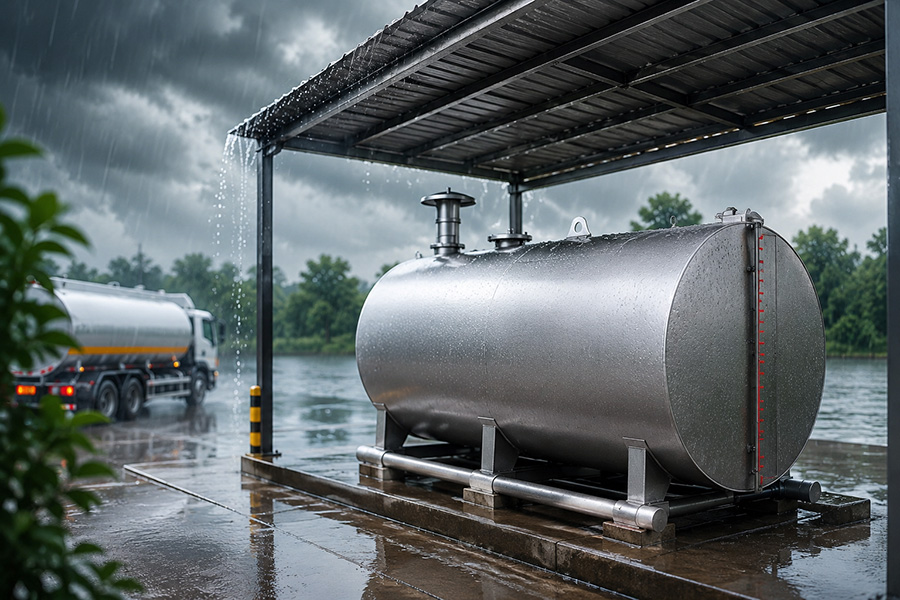
1. Check for Standing Water Around the Tank
Avoid allowing water to accumulate around the tank base. Standing water can accelerate corrosion and may cause the tank foundation to weaken or settle. Ensure proper drainage is in place around the storage area.
2. Keep Tank Lids and Fill Ports Securely Closed
Make sure all tank caps, lids, and fill points are tightly sealed to prevent rainwater, moisture, dust, and debris from entering the tank, especially for outdoor installations.
3. Regularly Drain Water from the Bottom of the Tank
Condensation can cause water to collect at the bottom of the tank over time. Inspect and drain accumulated water regularly to prevent fuel contamination and potential damage to engines and equipment.
4. Inspect Seals, Valves, and Piping
High humidity and frequent rainfall can accelerate wear on rubber seals, gaskets, valves, and piping components. Check for leaks or signs of deterioration and address any issues immediately.
5. Avoid Storing Fuel for Longer Than Necessary
Maintaining regular fuel turnover helps reduce the risk of contamination, oxidation, and fuel degradation. Fresh fuel supports better equipment performance and reliability.
6. Install a Cover or Roof for Outdoor Tanks
Providing overhead protection helps minimize direct exposure to rain and reduces temperature fluctuations that can lead to condensation inside the tank.
7. Monitor Fuel Quality Regularly
Businesses that consume large volumes of fuel—such as factories, transportation fleets, and heavy equipment operators—should routinely test for water contamination and sediment buildup to maintain fuel quality.
8. Inspect the Electrical System
Electrical safety is particularly important during wet weather.
- Electrical Cables: Ensure insulation is intact, free from damage or overheating, and that all connections are secure.
- Electrical Panels and Circuit Breakers: Conduct annual inspections, check for burn marks or unusual odors, and test safety breakers regularly.
- Grounding System: Verify that grounding connections and ground rods remain secure and in good condition.
Conclusion
Proper fuel tank maintenance during the rainy season can help:
- Extend fuel storage life
- Reduce engine shutdowns and injector blockages
- Lower equipment maintenance and repair costs
- Improve operational safety
A little preventive maintenance today can help avoid costly problems tomorrow.
